Texas’ outdoor recreation economy is thriving, the state should seize the moment
Texas’ outdoor recreation economy is thriving, the state should seize the moment
Texas’ outdoor recreation economy is thriving, the state should seize the moment

If you track the outdoor recreation economy, you might be struck that the industry seems to be approaching a tipping point. At least 24 states now have an Office for Outdoor Recreation -- or “OREC” for those acronym-trackers keeping up with the latest jargon. Spreading nationally over the past decade, these state offices have been established generally by executive or legislative action to promote and provide support for natural resources, public health, and the recreation industry.
The Texas Parks and Wildlife Department does what it can, yet the Lone Star state’s OREC remains MIA -- or more accurately TBD. And TPWD cannot really address the broad needs of the business community. In turn, the Texas Outdoor Recreation Alliance (TxORA) founded in 2024 has stepped into the breach to help outdoor industry stakeholders -- from economic development officers to rural landowners to race directors to gear manufacturers -- capitalize on a value-added economic sector that contributes an estimated $540 billion to the state’s GDP.
As Katherine Andrews, director of the widely lauded Arkansas Office of Outdoor Recreation and 2024 chair of the multi-agency Confluence of States puts it: “Every state has different needs, opportunities, and challenges, and that’s what makes this work so dynamic.” Outdoor retail in Texas totals $13.9 billion, manufacturing adds $12.9 billion, and sportfishing another $2 billion.
With that in mind, and having visited quite a bit with TxORA founders Alex Brown and his wife Lindsey Brown, who is the group’s outreach director, as well as many of the stakeholders, I thought I might offer a few proposals as planning continues for the Texas Outdoor Economy Summit next spring, which is scheduled to take place in Fairview, Texas.
1) A healthy outdoor economy demands a healthy natural environment, which I would argue means that effective stewardship of the land and water resources needs to be embraced by alliance-identified stakeholders. Do not mistake this message for a rigid anti-development stance, as from rustic resorts to RV parks, plenty of Texans do enjoy their nature served up with a side of comfort. But I would like to see a commitment to sustainable, effective conservation.
2) Calls for honest accounting when it comes to the recreation industry should be heeded. I borrow this idea from my colleague Mike Geraci in Jackson, Wyoming. Like Geraci, I am not sure I’m ready to designate both yachting and kayak fishing as outdoor sports, but it’s worth noting that they recently got lumped into the US Department of Commerce's $1.2 trillion estimate for outdoor recreation industry revenues nationwide. We should fine tune the numbers in Texas to emphasize smaller operations, and figure out other ways to create local opportunity.
3) Unlocking access and addressing accessibility. Texas is rightfully proud of its Western heritage, but the outdoor recreation economy continues to be hamstrung by the dominance of private lands which comprise 95 percent of the state. Things are turning around with the Texas Parks and Wildlife Centennial Campaign, and new and planned state parks at the Palo Pinto Mountains and Powderhorn Ranch. Likewise, as pertains to public health, urban parklands, and improved connectivity via safe trails, TxORA should endeavor to protect public open space.
These are personal suggestions, speaking as a journalist and sportsman who had lived in Texas 25 years. Having raised my daughter to enjoy nature, wildlife watching at Brazos Bend, learning to hunt side by side, and exploring Big Bend, I expect an improved Texas outdoor recreation economy offers a bright path forward for businesses and the public at large. Of course, TxORA and many of its members will have their own positions. Regardless, those invested in outdoor recreation know the rewards that come from climbing the highest peak or reeling in the fish of a lifetime -- whether it gets photographed and released or winds up on the dinner plate -- and what’s worth our extra effort.
- Dan Oko, Guest Columnist
Dan Oko is a Houston-based freelance writer specializing in recreation and environmental topics. His work has been featured in AAA Explorer, Texas Monthly, Outside, Men's Journal, Garden & Gun and Texas Parks and Wildlife Magazine.

Now Accepting Submissions for the 2026 Texas Outdoor Economy Summit.
Join leading voices on economic innovation, outdoor business growth and conservation, with exclusive opportunities for visibility, thought leadership, and engagement at this inaugural event.
Submission Form Link - Partnering Sponsors, Vendors, Speakers & Panelists
If you track the outdoor recreation economy, you might be struck that the industry seems to be approaching a tipping point. At least 24 states now have an Office for Outdoor Recreation -- or “OREC” for those acronym-trackers keeping up with the latest jargon. Spreading nationally over the past decade, these state offices have been established generally by executive or legislative action to promote and provide support for natural resources, public health, and the recreation industry.
The Texas Parks and Wildlife Department does what it can, yet the Lone Star state’s OREC remains MIA -- or more accurately TBD. And TPWD cannot really address the broad needs of the business community. In turn, the Texas Outdoor Recreation Alliance (TxORA) founded in 2024 has stepped into the breach to help outdoor industry stakeholders -- from economic development officers to rural landowners to race directors to gear manufacturers -- capitalize on a value-added economic sector that contributes an estimated $540 billion to the state’s GDP.
As Katherine Andrews, director of the widely lauded Arkansas Office of Outdoor Recreation and 2024 chair of the multi-agency Confluence of States puts it: “Every state has different needs, opportunities, and challenges, and that’s what makes this work so dynamic.” Outdoor retail in Texas totals $13.9 billion, manufacturing adds $12.9 billion, and sportfishing another $2 billion.
With that in mind, and having visited quite a bit with TxORA founders Alex Brown and his wife Lindsey Brown, who is the group’s outreach director, as well as many of the stakeholders, I thought I might offer a few proposals as planning continues for the Texas Outdoor Economy Summit next spring, which is scheduled to take place in Fairview, Texas.
1) A healthy outdoor economy demands a healthy natural environment, which I would argue means that effective stewardship of the land and water resources needs to be embraced by alliance-identified stakeholders. Do not mistake this message for a rigid anti-development stance, as from rustic resorts to RV parks, plenty of Texans do enjoy their nature served up with a side of comfort. But I would like to see a commitment to sustainable, effective conservation.
2) Calls for honest accounting when it comes to the recreation industry should be heeded. I borrow this idea from my colleague Mike Geraci in Jackson, Wyoming. Like Geraci, I am not sure I’m ready to designate both yachting and kayak fishing as outdoor sports, but it’s worth noting that they recently got lumped into the US Department of Commerce's $1.2 trillion estimate for outdoor recreation industry revenues nationwide. We should fine tune the numbers in Texas to emphasize smaller operations, and figure out other ways to create local opportunity.
3) Unlocking access and addressing accessibility. Texas is rightfully proud of its Western heritage, but the outdoor recreation economy continues to be hamstrung by the dominance of private lands which comprise 95 percent of the state. Things are turning around with the Texas Parks and Wildlife Centennial Campaign, and new and planned state parks at the Palo Pinto Mountains and Powderhorn Ranch. Likewise, as pertains to public health, urban parklands, and improved connectivity via safe trails, TxORA should endeavor to protect public open space.
These are personal suggestions, speaking as a journalist and sportsman who had lived in Texas 25 years. Having raised my daughter to enjoy nature, wildlife watching at Brazos Bend, learning to hunt side by side, and exploring Big Bend, I expect an improved Texas outdoor recreation economy offers a bright path forward for businesses and the public at large. Of course, TxORA and many of its members will have their own positions. Regardless, those invested in outdoor recreation know the rewards that come from climbing the highest peak or reeling in the fish of a lifetime -- whether it gets photographed and released or winds up on the dinner plate -- and what’s worth our extra effort.
- Dan Oko, Guest Columnist
Dan Oko is a Houston-based freelance writer specializing in recreation and environmental topics. His work has been featured in AAA Explorer, Texas Monthly, Outside, Men's Journal, Garden & Gun and Texas Parks and Wildlife Magazine.
Now Accepting Submissions for the 2026 Texas Outdoor Economy Summit.
Join leading voices on economic innovation, outdoor business growth and conservation, with exclusive opportunities for visibility, thought leadership, and engagement at this inaugural event.
Submission Form Link - Partnering Sponsors, Vendors, Speakers & Panelists
Member Testimonials
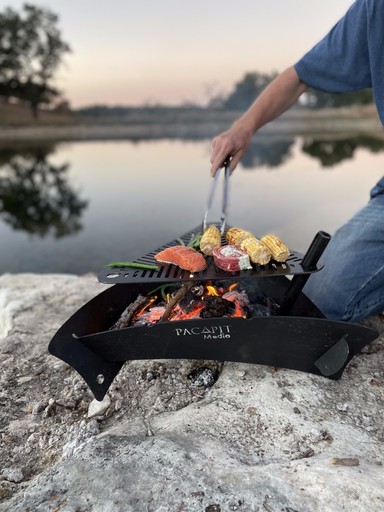
“Being a member of TxORA has been a wealth of data, information and connections. As PacAPit is a growing brand, association with other like minded TxORA members has direct impact on the success of PacAPit. I am excited to be an early adopter and seeing the expansion of TxORA. Great adventures are ahead!”
PacAPit
John Chadwell
CEO, Owner & Inventor
@thepacapit
Member Testimonials
“Being a member of TxORA has been a wealth of data, information and connections. As PacAPit is a growing brand, association with other like minded TxORA members has direct impact on the success of PacAPit. I am excited to be an early adopter and seeing the expansion of TxORA. Great adventures are ahead!”
PacAPit
John Chadwell
CEO, Owner & Inventor
@thepacapit
Member Testimonials
“Being a member of TxORA has been a wealth of data, information and connections. As PacAPit is a growing brand, association with other like minded TxORA members has direct impact on the success of PacAPit. I am excited to be an early adopter and seeing the expansion of TxORA. Great adventures are ahead!”
PacAPit
John Chadwell
CEO, Owner & Inventor
@thepacapit